
Email Marketing Campaign Examples B2B and Ecommerce Brands Can Use
Posted on
Web Design
Posted at
Jun 5, 2026
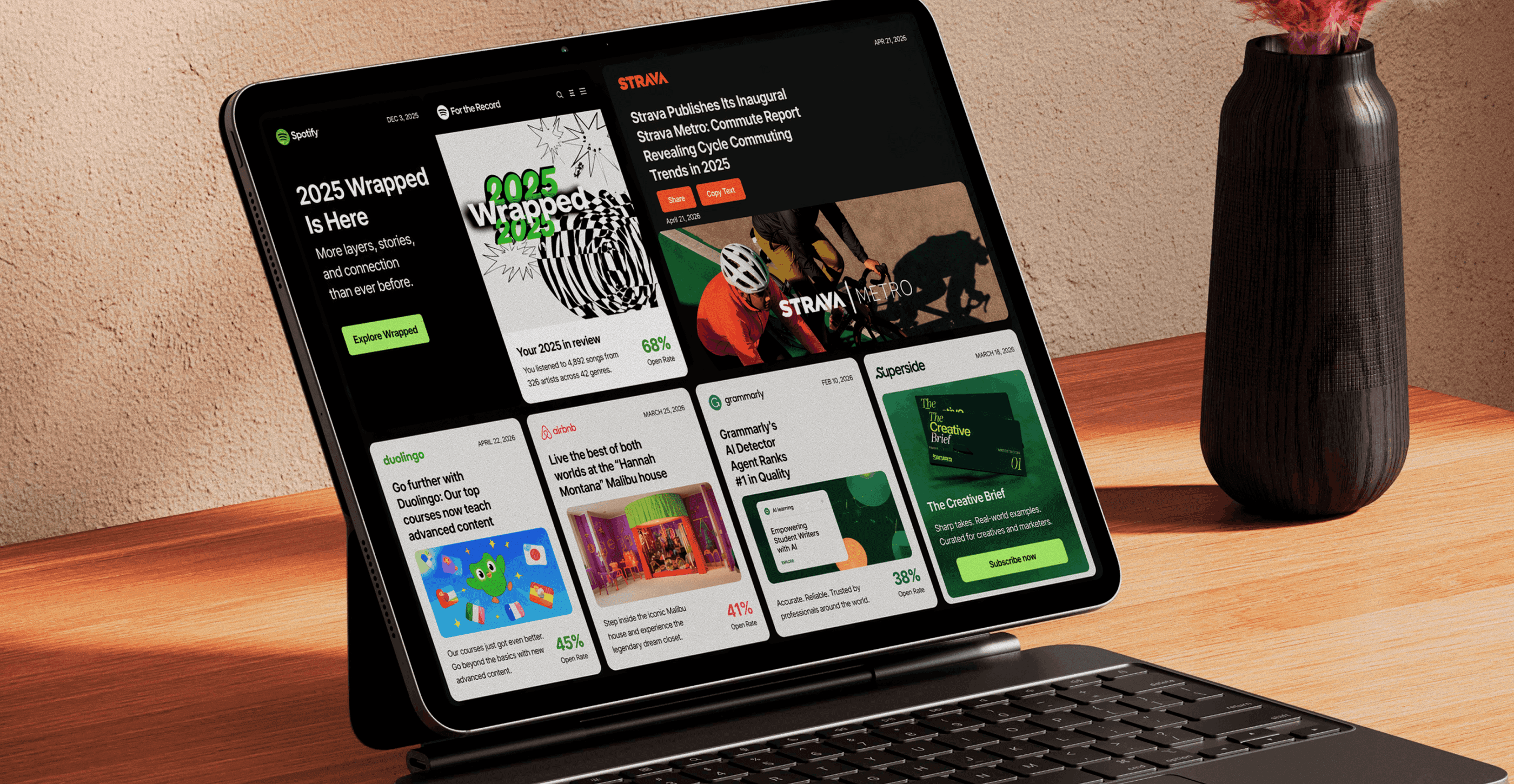
Email still works because it reaches people in a place where decisions, reminders and offers already live. But effective email marketing is not just sending more messages. It is matching the right message to the right moment with a design system that makes each send easy to understand and easy to act on.
For service businesses, B2B companies and ecommerce brands, the best email campaigns usually fall into a few useful patterns. These examples can be adapted without copying another brand's voice or visual style.
1. The Welcome Sequence
A welcome sequence should do more than say hello. It should explain what the brand helps with, why it is credible and what the subscriber should do next. For ecommerce, this could include bestsellers, social proof and a first-purchase incentive. For B2B, it might introduce the core problem, a useful resource and a low-friction call to book a conversation.
Keep the design modular: a hero message, a proof block, a product or service highlight and one clear action. A welcome email is not a brochure. It is the first useful step in the relationship.
2. The Problem-Education Email
Many buyers are not ready to purchase because they have not fully named the problem yet. Educational emails help them understand the cost of inaction, the common mistakes and the criteria for choosing a solution.
This works especially well for service and B2B companies. Instead of pushing the offer immediately, teach the buyer how to think about the decision. The CTA can point to a guide, consultation, calculator, case study or comparison page.
3. The Product Drop or Offer Email
Ecommerce brands depend on timely offer emails, but the strongest versions still need a story. Show what is new, who it is for, why it matters and what action to take. Use supporting imagery that makes the product feel real, not just discounted.
For service businesses, the equivalent might be a limited booking window, a seasonal package or a focused audit offer. The structure is similar: clear promise, proof, urgency and a direct next step.
4. The Proof Email
Proof emails reduce risk. They can feature a customer story, before-and-after result, review, metric, portfolio piece or short testimonial. B2B buyers often need proof they can share internally, while ecommerce customers need proof that the product will solve their specific need.
Design matters here. Pull the strongest result into the subject line or hero area, then use the body to explain the context. A good proof email should be skimmable in seconds.
5. The Re-Engagement Email
Inactive subscribers are not always lost. Sometimes they need a sharper reason to care. A re-engagement campaign can ask what they want to receive, offer a best-of roundup, provide a new incentive or invite them to update preferences.
Keep the tone human. The goal is not to guilt the reader. The goal is to give them a clear reason to stay or gracefully let them go.
Design the System, Not Just the Send
One-off emails become slow and inconsistent. A modular email system gives your team reusable sections for offers, proof, product highlights, education and CTAs. Orchidea Digital builds email thinking around that principle: repeatable structure, strong creative and clear commercial intent.
When the system is strong, each campaign becomes faster to produce and easier to optimize. That is where email becomes a growth channel instead of a recurring scramble.


